




































Choosing the right patient hoist is essential for ensuring safe and comfortable transfers for both the user and the caregiver. Whether you’re purchasing for home use or a care environment, the right hoist can significantly improve daily routines while reducing the risk of injury.
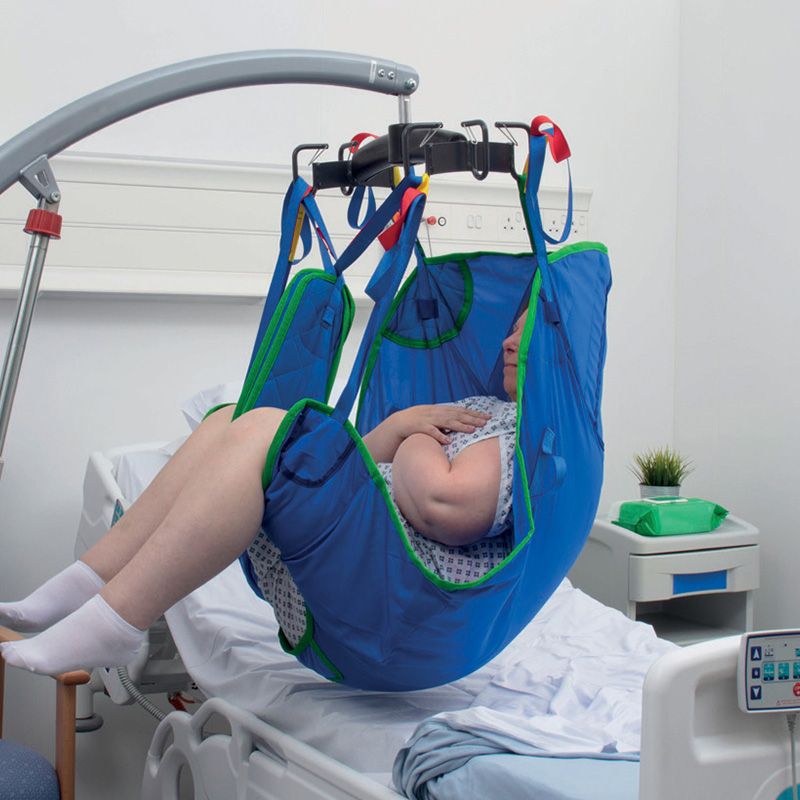
This guide explains the key factors to consider when selecting a hoist, along with examples of commonly used models to help you make an informed decision.
1. Understand Hoists for Elderly Care
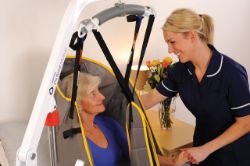
Mobile hoists are the most widely used type across UK homes and care settings. They are designed to be versatile, easy to manoeuvre, and suitable for a variety of transfers, including bed-to-chair and floor lifts.
Examples of mobile hoists include:

Prism Freeway S 180 Mobile Hoist,

Oxford Midi 180 Electric Hoist,
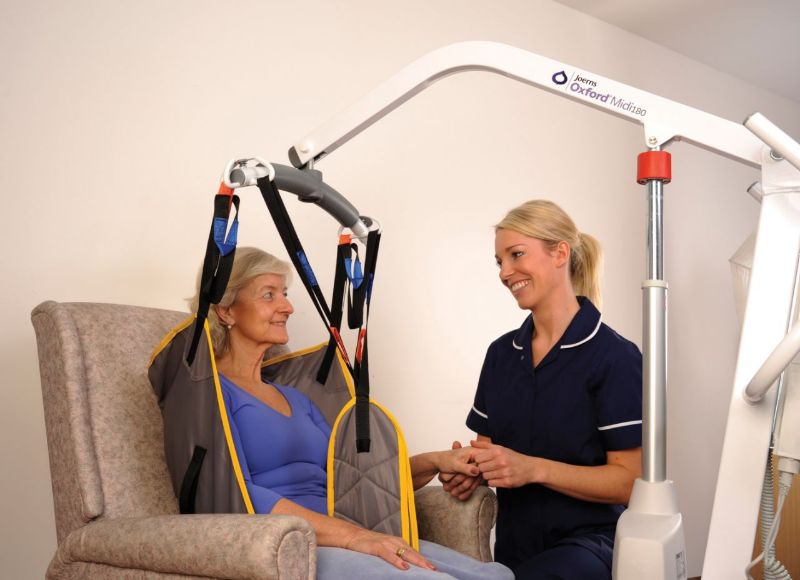
and the Alerta Powerlifter Maxi 175 Hoist

Each of these models offers similar core functionality, but may vary slightly in design, handling, and user preferences.
- Check the Safe Working Load (SWL)
The safe working load is one of the most important considerations when choosing a hoist.
- Standard mobile hoists typically support 150–180 kg
- Some models offer slightly higher or lower limits depending on design
For example:
- The Samsoft Elite 180 Hoist and Prism Freeway S 180 Mobile Hoist both support up to 180 kg
- The Oxford Midi 180 Electric Hoist also sits within this range and is widely used in care environments
- The Alerta Powerlifter Maxi 175 Hoist offers a slightly lower capacity at 175 kg
Always ensure the hoist exceeds the user’s weight to maintain safety and performance.
- Consider the User’s Needs
The user’s mobility level will determine the type of hoist required.
Mobile hoists are generally suitable for:
- Individuals with limited or no weight-bearing ability
- Full-body transfers
- Daily use in both home and care settings
Different models may offer variations in lift range, spreader bar design, or positioning, which can affect comfort during transfers.
- Assess Your Environment
Your surroundings play a key role in selecting the right hoist.
Consider:
- Room size and layout
- Doorway widths
- Storage space
- Flooring type
Some hoists are designed with compact frames or folding mechanisms, making them easier to store or transport. Others prioritise stability and may have a wider footprint.
For example, models like the Prism Freeway S 180 Mobile Hoist and Oxford Midi 180 Electric Hoist are often chosen in care settings where durability and frequent use are priorities, while others may suit more compact home environments.
- Sling Compatibility
Choosing the correct sling is just as important as selecting the hoist itself.
Most mobile hoists, including the models mentioned above, use loop fixing systems, which are compatible with a wide range of slings such as:
- Universal slings
- Toileting slings
- Mesh bathing slings
Ensuring compatibility helps improve both safety and user comfort.
Browse our full range of compatible slings to find the right fit.
- Ease of Use
A good hoist should simplify transfers for carers.
Look for features such as:
- Smooth lifting and lowering
- Easy-to-use hand controls
- Adjustable leg spreaders
- Manoeuvrable castors
Different models may feel slightly different in operation, so ease of use often comes down to personal preference and the care environment.
- Safety Features
All hoists should include essential safety features, such as:
- Emergency stop button
- Emergency lowering mechanism
- Stable base and braking system
- Compliance with UK safety standards
These features are standard across most reputable hoists, including the ones shown above.
Final Thoughts
Selecting the right patient hoist involves balancing user needs, environment, and practical usability.
Mobile hoists remain the most common and versatile option, with models such as the Samsoft Elite 180 Hoist,
Prism Freeway S 180 Mobile Hoist, Oxford Midi 180 Electric Hoist, and Alerta Powerlifter Maxi 175 Hoist all offering reliable solutions for everyday transfers.
By focusing on safety, compatibility, and ease of use, you can choose a hoist that provides confidence and comfort for both users and carers.
Need Help Choosing?
If you’re unsure which hoist is right for your needs, the team at Healthcare Direct can provide guidance to help you find the most suitable option.
📞 020 8236 0060 🛒 Shop our Hoists
Email: [email protected]
Healthcare Direct Ltd
Care House, Chester Road,
Borehamwood, Herts, WD6 1LP